

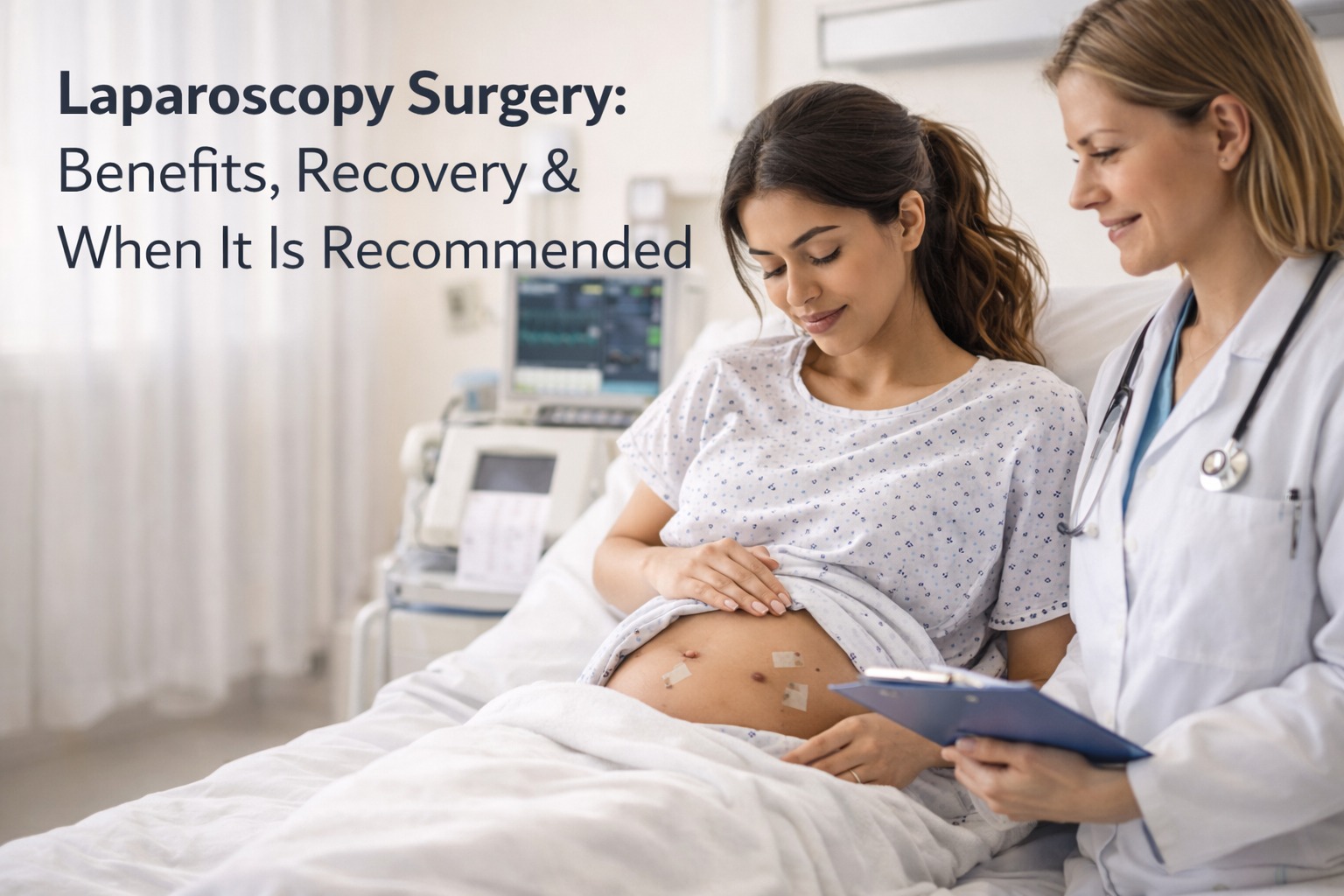
Modern medical treatments today focus on safer procedures and faster healing. One of the most widely preferred methods is laparoscopy surgery, a minimally invasive technique used in gynecology, fertility care, radiology-assisted procedures, and general surgical treatments. Many patients at Sri Vinayak Nursing Home in Gangavathi choose this approach because it offers faster healing, less pain, and minimal scarring.
What Is Laparoscopy Surgery? How Does It Work?
Laparoscopy surgery is performed using a thin tube with a camera attached (laparoscope). It is inserted through small incisions—usually around 0.5–1 cm—allowing the surgeon to see internal organs clearly on a monitor. Unlike traditional open surgery, this method does not require large cuts.
To create working space, the abdomen is filled with CO₂ gas. This lifts the abdominal wall away from internal organs so the surgeon has better access and visibility.
This method is commonly used for diagnosis as well as treatment.
Why Doctors Recommend Laparoscopy Surgery
Doctors prefer laparoscopy surgery because it reduces complications, minimizes pain, and offers a faster recovery compared to open surgery. It is widely used in gynecology, fertility treatments, abdominal surgeries, and emergency care.
Patients also choose this option due to:
- Less postoperative discomfort
- Lower infection risk
- Shorter hospital stay
- Faster return to daily life
Major Benefits of Minimally Invasive Treatment
Here are the key advantages:
1. Smaller Incisions
Only tiny cuts are made, resulting in almost invisible scars.
2. Faster Recovery
Patients often resume normal activities within a few days.
3. Less Pain
Minimal tissue damage means reduced postoperative pain.
4. Lower Risk of Infection
Smaller openings reduce the chance of infection.
5. High Accuracy
The HD camera gives precise visibility of internal organs.
6. Short Hospital Stay
Most procedures allow same-day or next-day discharge.
Advanced Gynecology Problems Treated Through Minimally Invasive Procedures
Gynecology is one of the most common fields where laparoscopy surgery is used. Sri Vinayak Nursing Home in Gangavathi regularly performs advanced gynecology laparoscopic procedures.
🔹 Endometriosis
Both diagnosis and removal can be done with minimal cuts.
🔹 Ovarian Cyst Removal
Large cysts can be removed with smaller incisions.
🔹 Fibroid Removal
Laparoscopic myomectomy helps preserve the uterus.
🔹 Ectopic Pregnancy
Treats pregnancy outside the uterus safely.
🔹 Pelvic Pain
Helps detect internal causes of long-term pain.
How Laparoscopy Surgery Helps in Fertility & IVF
In fertility care, laparoscopy surgery helps treat multiple conditions that can prevent pregnancy:
- Blocked fallopian tubes
- Endometriosis
- Pelvic infections
- Scar tissue (adhesions)
- Uterine abnormalities
By correcting these issues, laparoscopy increases the chances of natural conception and boosts IVF success rates.
Role of Radiology in Laparoscopy Surgery
Radiology plays a major role in planning the surgery. Imaging like ultrasound, CT, and MRI scans help doctors understand the exact problem before operating. This improves precision and outcomes.
General Surgical Conditions Managed Through Laparoscopy
Beyond gynecology and fertility, laparoscopy surgery is used in general surgery for:
- Gallbladder removal
- Appendix removal
- Hernia repair
- Adhesion removal
- Biopsies
- Tumor evaluation
Its accuracy and quick healing make it a preferred method in many general surgical cases.
Who Needs Laparoscopy Surgery?
Doctors recommend this procedure for patients who experience:
- Severe pelvic or abdominal pain
- Ovarian cysts
- Fibroids
- Infertility issues
- Repeated digestive problems
- Unexplained internal bleeding
- Chronic infections
- Menstrual irregularities
How to Prepare for Laparoscopy Surgery
Proper preparation helps in smoother surgery and recovery:
Follow fasting guidelines
Doctors usually recommend skipping solid foods 6–8 hours before surgery.
Stop blood-thinning medicines
These may affect bleeding and healing.
Share medical history
Tell your doctor about allergies, previous surgeries, and ongoing medicines.
Get recommended tests
Blood tests, imaging, and physical evaluation are mandatory.
Recovery After Laparoscopy Surgery
Most patients recover quickly due to the minimally invasive nature of the surgery.
Mild Shoulder Pain
Caused by CO₂ gas, fades within 1–2 days.
Slight Bloating
Improves naturally after a few days.
Light Spotting
Common in gynecology-related cases.
Quick Return to Activities
Most people resume regular work in 3–7 days.
Full Internal Healing
Takes around 2–4 weeks.
Post-Surgery Care Tips for Faster Healing
Doctors advise the following after laparoscopy surgery:
- Eat light, easy-to-digest foods
- Drink enough water
- Avoid heavy lifting
- Take medicines on time
- Walk slowly to improve blood circulation
- Maintain hygiene around incisions
- Attend follow-up appointments
These steps help prevent complications.
Risks & Complications of Laparoscopy Surgery
Although safe, rare complications may include:
- Infection
- Bleeding
- Allergic reaction to anesthesia
- Hernia at incision site
- Organ injury (very rare)
- Blood clot
Experienced surgeons significantly reduce these risks.
Why Patients Prefer Laparoscopy Surgery at Sri Vinayak Nursing Home
- Advanced equipment
- Experienced laparoscopic surgeons
- Modern operation theaters
- Comprehensive gynecology & fertility care
- Emergency support
- Safe & hygienic environment
Their expertise ensures faster healing and better surgical outcomes for patients.
When to Consult a Doctor for Minimally Invasive Treatment
You should seek medical help if you notice:
- Persistent abdominal or pelvic pain
- Repeated bloating or discomfort
- Heavy menstrual bleeding
- Fertility issues
- Painful menstrual cycles
- Ovarian cyst symptoms
- Sudden internal pain
Early diagnosis leads to better results and prevents complications.
Conclusion
Laparoscopy surgery has transformed modern healthcare by offering faster recovery, less pain, and highly accurate outcomes. Whether it is used for gynecology, fertility, radiology-supported procedures, or general surgical care, it ensures better healing and improved quality of life.
If you are experiencing symptoms or your doctor has advised surgery, consulting an expert early will help you understand whether laparoscopy is the right choice for your condition.