Pregnancy is one of the most beautiful experiences in a woman’s life. But sometimes, this journey needs extra attention and medical care. When a woman or her baby has a higher chance of complications during pregnancy, it is known as a high-risk pregnancy. Even though the term may sound scary, the good news is that with the right care, monitoring, and lifestyle choices, most mothers can still have a safe and healthy delivery.
This guide is designed to help expecting mothers understand high-risk conditions, early symptoms, monitoring methods, and prevention tips—explained in a simple and comforting way.
What Is a High-Risk Pregnancy?
A pregnancy becomes high-risk when certain health conditions, age factors, or pregnancy complications increase the chances of risks for the mother or the baby. This does not mean something will definitely go wrong—it only means that the pregnancy requires closer monitoring.
Doctors provide extra care, more frequent checkups, and special tests to ensure the mother and baby stay safe at every stage.
Why Do Some Pregnancies Become High-Risk?
There can be several reasons. Some women have medical conditions even before pregnancy, while others develop complications during pregnancy.
Common Reasons Include:
- Existing medical issues
- Pregnancy-related problems
- Lifestyle habits
- Family health history
- Age factors
Understanding the cause early helps avoid complications later.
Common Medical Conditions That Increase Pregnancy Risk
Certain health conditions need extra care during pregnancy.
1. Diabetes
Women with diabetes may face fluctuations in blood sugar levels. This can affect the baby’s growth, so regular monitoring is important.
2. High Blood Pressure
Hypertension can lead to complications like preeclampsia, which needs quick treatment and frequent checkups.
3. Thyroid Issues
Both overactive and underactive thyroid glands can cause problems if not treated properly.
4. Heart Conditions
Pregnancy increases the workload on the heart, so mothers with heart issues require expert care.
5. Autoimmune Disorders
Conditions like lupus or rheumatoid arthritis affect the immune system and need special monitoring.
Pregnancy Conditions That May Cause a High-Risk Pregnancy
Even healthy women may develop complications during pregnancy.
Gestational Diabetes
A temporary form of diabetes that develops during pregnancy. Diet control and monitoring are the key to managing it.
Anemia
Low hemoglobin levels can make the mother weak and affect the baby’s growth.
Placenta Previa
The placenta covers the cervix, which may cause bleeding and requires careful monitoring.
Preterm Labor
Contractions before 37 weeks of pregnancy need immediate attention.
Infections
Infections can affect the baby and should be treated quickly.
Who Is More Likely to Have a High-Risk Pregnancy?
Some women fall into the high-risk category due to age, lifestyle, or previous pregnancy history.
Higher-Risk Groups Include:
- Women below 18 or above 35
- Mothers carrying twins or triplets
- Women with obesity or underweight
- Women with previous miscarriages
- Those who smoke or consume alcohol
- Those who had complications in earlier pregnancies
Early screening helps prevent problems later.
Warning Signs You Should Not Ignore
Reach a doctor immediately if you notice:
- Heavy bleeding
- Sudden swelling in hands or face
- Severe headaches
- Painful cramps
- Blurred vision
- No movement from the baby
- High fever
- Constant vomiting
- Dizziness or fainting
Quick action prevents serious risks and protects both mother and baby.
Why Monitoring Matters in a High-Risk Pregnancy
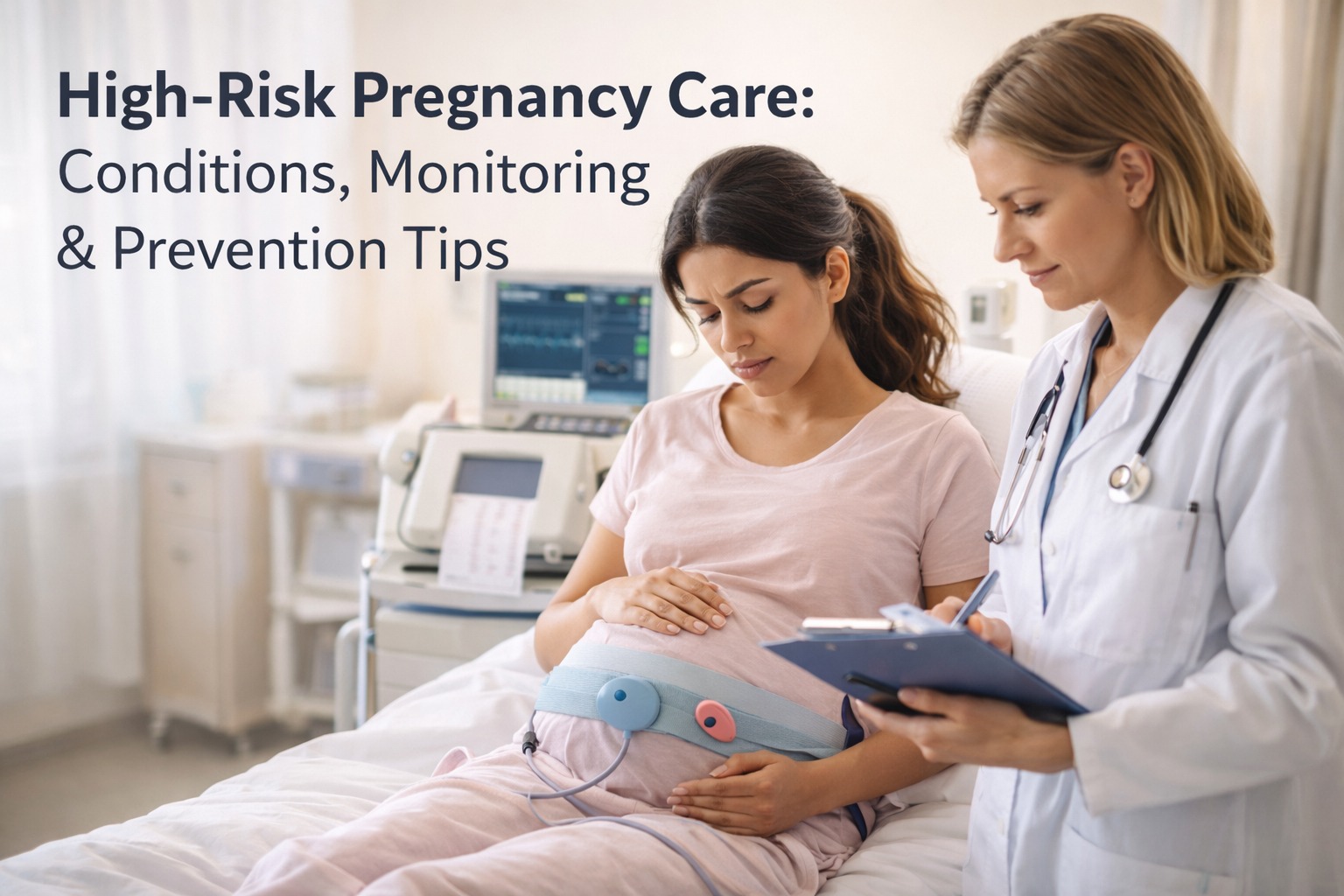
Proper monitoring helps doctors keep track of the mother’s and baby’s health. Modern medical tests make it easy to detect issues early.
Important Monitoring Methods Include:
1. Ultrasound Scans
Check the baby’s growth, placenta position, and amniotic fluid levels.
2. Doppler Test
Measures the blood flow between the placenta and baby.
3. Non-Stress Test (NST)
Monitors the baby’s heartbeat when the baby moves.
4. Blood Pressure Checks
Helps detect hypertension or early signs of preeclampsia.
5. Blood Tests
These include thyroid tests, sugar tests, and anemia screening.
6. Fetal Echocardiography
This checks for any heart problems in the baby.
Monitoring ensures a safer pregnancy and delivery.
How to Manage a High-Risk Pregnancy: Friendly Tips
You can manage a high-risk pregnancy better with simple changes.
Eat Healthy Food
Eat more fruits, vegetables, whole grains, dairy, and protein. Avoid junk food and sugary snacks.
Stay Hydrated
Drinking plenty of water improves blood flow to the baby.
Sleep Well
Good sleep keeps stress levels low and improves health.
Mild Exercise
Walking and simple stretches help improve blood circulation. Always consult your doctor first.
Avoid Alcohol and Smoking
These affect fetal growth and increase complications.
Take Supplements
Doctors may prescribe folic acid, iron, calcium, and vitamins.
Regular Checkups
Never skip antenatal visits—they help detect issues early.
Preventing Risks Before and During Pregnancy
Some simple measures help reduce the chances of complications.
Before Pregnancy
- Control existing medical conditions
- Start prenatal vitamins
- Maintain healthy weight
- Avoid harmful habits
During Pregnancy
- Follow your doctor’s instructions
- Track fetal movements
- Rest whenever needed
- Avoid heavy tasks
- Eat on time
- Keep stress low
Small steps can make a big difference.
Delivery Options in a High-Risk Pregnancy
Delivery depends on the mother’s condition and the baby’s health.
Normal Delivery
Possible if risks are controlled.
Induced Labor
Recommended when the pregnancy should not continue for health reasons.
Cesarean Delivery
Suggested in cases like placenta previa, severe hypertension, or fetal distress.
Doctors choose the safest option based on your health.
Post-Pregnancy Care for High-Risk Mothers
Care doesn’t stop after childbirth. Mothers need to follow certain precautions:
- Regular follow-ups
- Monitoring blood pressure and sugar
- Proper wound care (if C-section)
- Attention to mental health
- Breastfeeding support
Good postpartum care helps mothers recover faster.
Conclusion
A high-risk pregnancy may feel overwhelming at first, but with the right care, monitoring, and support, most mothers deliver healthy babies. Understanding symptoms, knowing the risks, following medical advice, and staying positive make the journey smoother and safer.
Every pregnancy is unique, and with the right guidance, motherhood becomes a beautiful and safe experience.